Glove box leak testing is essential for maintaining atmosphere integrity in lithium battery research and chemical synthesis laboratories. When oxygen levels drift upward or recovery time increases without clear cause, a systematic leak test can identify the root cause before experimental quality suffers. This guide provides a step-by-step approach to pressure decay testing, common leak locations, and preventive maintenance strategies that reduce downtime by up to 40%.
Key Takeaways:
Learn overpressure and underpressure testing methods
Identify leak locations in gloves, ports, and feedthroughs
Establish daily pressure management discipline
What “Leak” Means in a Glove Box And What It Doesn’t
Understanding the definition of a leak is the first step toward solving instability problems. In controlled atmosphere systems, not every fluctuation indicates structural failure. Clear differentiation prevents unnecessary service interventions and wasted maintenance time.
True Leaks vs Operational Contamination
A true leak is a physical pathway through which external air enters or internal inert gas escapes due to compromised sealing. This may occur because of aging door gaskets, improperly mounted gloves, damaged O-rings, loosened feedthrough fittings, or wear in valve assemblies. True leaks affect pressure stability even when the system is idle. Oxygen and moisture values slowly increase despite no active transfer operations. Pressure decay tests confirm these issues because measurable pressure loss occurs under controlled conditions.
Operational contamination is different. It results from workflow behavior rather than mechanical failure. An incomplete antechamber purge, premature opening of internal doors, introduction of inadequately dried materials, or solvent vapor release can all cause atmosphere spikes. However, once purification systems restore stability, values return to baseline. In these cases, structural integrity remains intact. Distinguishing these scenarios requires disciplined observation rather than reactive disassembly.
Why Readings Can Rise Without a Leak
Pressure and atmosphere readings can fluctuate due to normal system dynamics. Temperature changes alter internal pressure because gas expands and contracts with thermal variation. Adjustments to circulation speed influence sensor response time. Introducing large materials changes internal volume distribution. Even purifier regeneration cycles may temporarily shift readings.
Without structured interpretation, these normal variations may be mistaken for leaks. That is why pressure decay testing remains the most reliable diagnostic method. It removes variables and isolates sealing performance.
The Two Leak Test Approaches Most Laboratories Use
Leak testing methods rely on controlled pressure manipulation to determine whether the enclosure maintains integrity over time. Two primary approaches are widely accepted in laboratory practice: overpressure pressure-decay testing and underpressure rate-of-rise testing.
Overpressure Pressure-Decay Testing
This method involves introducing inert gas into the chamber until internal pressure rises slightly above ambient atmospheric pressure. Once the target level is reached, all inlets and outlets are sealed. The internal pressure is then monitored over a defined time period.
If the system is airtight, pressure remains stable within acceptable tolerance. If pressure decreases measurably, gas is escaping through a leak pathway. The rate of pressure decay indicates severity. A rapid drop suggests a significant leak such as a torn glove or improperly sealed port. A slow decline indicates micro-leakage caused by aging seals or minor imperfections.
The advantage of overpressure testing is simplicity and safety. It does not stress structural components excessively and is compatible with most inert atmosphere glove box systems.
Underpressure Rate-of-Rise Testing
Underpressure testing operates on the opposite principle. The chamber is evacuated slightly below ambient pressure and sealed. If external air enters through a leak, internal pressure rises gradually toward atmospheric levels.
This method is particularly useful in vacuum-integrated systems, where vacuum capability is part of routine operation. However, underpressure testing requires careful control to prevent structural stress or contamination. Monitoring must be precise to avoid misinterpretation caused by temperature fluctuation.
Both approaches rely on the same principle: isolating the chamber from external variables and observing pressure behavior over time.
Step-by-Step: Pressure Decay Leak Test Workflow
A structured procedure ensures that results are meaningful and repeatable. Random or rushed testing often produces misleading conclusions.
Preparation and Stabilization
Before initiating a glove box leak test, stabilize the system. All ports must be fully closed. Gloves should be mounted securely and free from visible damage. Circulation systems should operate according to site protocol, and internal temperature must remain stable. Temperature stabilization is particularly important because even small fluctuations influence pressure readings.
Remove unnecessary disturbances. Avoid opening external panels or introducing materials during testing. The goal is to create a steady baseline.
Establishing the Test Pressure
For overpressure testing, gradually introduce inert gas until reaching the recommended pressure level defined by manufacturer guidelines. The pressure should be high enough to detect leakage but not so high as to stress seals and gloves.
For underpressure testing, gently evacuate the chamber to the specified level. Avoid aggressive evacuation that may distort flexible components.
Allow the system to rest for several minutes before recording measurements. This waiting period ensures pressure equilibrium.
Monitoring and Interpretation
Record the starting pressure value and monitor it over a defined time interval, often between ten and thirty minutes depending on internal SOP standards. The acceptable pressure drop threshold varies according to system size and performance specifications.
Stable pressure indicates structural integrity. Noticeable decay suggests leakage. If pressure decreases rapidly, inspect obvious components such as gloves and ports. If decay is gradual, perform sectional isolation to narrow down the leak location.
Documentation is essential. Recording test results over time allows trend analysis. Repeated micro-leak patterns often reveal gradual seal aging before major failure occurs.
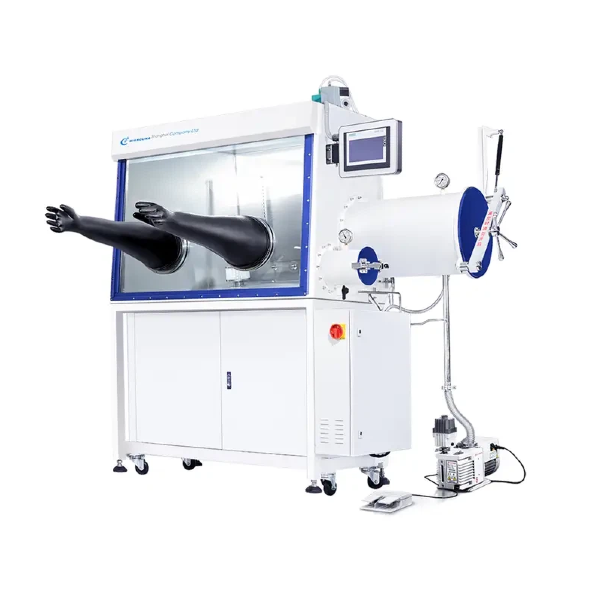
Where Leaks Usually Hide: A Practical Inspection Map
Leak localization requires logical progression rather than random searching. Most glove box leaks occur in predictable areas.
Gloves and Glove Ports
Gloves experience continuous mechanical stress. Repeated bending, chemical exposure, and pressure changes weaken material integrity. Micro-tears or thinning may not be visible but can allow slow gas exchange. Ports must maintain tight mechanical compression. Improper mounting creates leakage pathways.
Routine glove integrity checks significantly reduce risk. Replacement intervals should follow usage intensity rather than waiting for visible failure.
Antechamber Doors and Sealing Surfaces
Antechamber systems rely on O-rings and flat gaskets. Over time, compression reduces elasticity. Dust, residue, or misalignment compromise sealing effectiveness. Regular cleaning and gasket inspection preserve integrity.
Because transfers occur frequently, the antechamber is often the most stressed sealing interface.
Feedthroughs, Valves, and Piping Connections
Electrical feedthroughs, gas inlet lines, vacuum connections, and pressure relief valves are mechanical interfaces susceptible to loosening. Vibrations and repeated pressure cycling contribute to wear.
Modular glove box systems simplify sectional isolation, allowing targeted inspection rather than full disassembly.
Pressure Management in Daily Operation
Leak testing verifies integrity, but daily pressure management preserves it.
Slight Overpressure as a Protective Strategy
Maintaining slight positive pressure inside the glove box reduces ingress risk. If microscopic gaps exist, inert gas flows outward instead of ambient air entering. This protective strategy is widely applied in controlled atmosphere systems.
However, overpressure must remain moderate. Excessive pressure strains gloves and gaskets, accelerating wear and reducing comfort.
Risks of Excessive Negative Pressure
Underpressure during routine operation may increase structural stress and allow faster ingress if sealing is imperfect. Negative pressure environments require careful balance to avoid compromising system longevity.
Establishing Consistent Pressure Discipline
Operators should avoid rapid pressure changes, monitor indicators regularly, and follow standardized transfer cycles. Consistency extends component life and maintains atmosphere stability.
Training and clear SOP implementation transform pressure management from reactive correction into routine discipline.
Diagnostic Table for Rapid Reference
Symptom | Likely Cause | First Check | Next Step |
Oxygen slowly rising | Aging seal or micro-leak | Inspect door gaskets and ports | Perform pressure decay test |
Sudden spike after transfer | Incomplete purge | Review purge cycle discipline | Standardize procedure |
Unable to maintain pressure | Major leakage | Check gloves and mounting | Isolate sections for testing |
This structured mapping accelerates diagnosis and reduces unnecessary downtime.
Intelligent Monitoring and Modular Architecture
Modern glove box systems benefit from integrated monitoring platforms that continuously track oxygen, moisture, and pressure. Early warning alarms notify operators of deviations before they escalate into critical failures. Trend analysis identifies gradual seal degradation or purifier performance decline.
Mikrouna (Shanghai) Industrial Intelligent Technology Co., Ltd., founded in 2004 with registered capital of 107 million RMB, integrates research, development, manufacturing, sales, and service to deliver advanced glove box systems globally. As a leading enterprise in the vacuum glove box industry, Mikrouna employs modular architecture and high-precision sensor integration to simplify leak diagnostics and maintain stable performance.
Headquartered in Shanghai with major manufacturing bases in Shanghai, Xiaogan, and Wuqing, and supported by a sales center in the United States, the company designs scalable systems suitable for battery research, chemical synthesis, nanomaterials development, and nuclear applications. Modular design enables isolation of individual chambers and components during leak testing, significantly reducing maintenance time and protecting laboratory productivity.
Integrated monitoring and robust sealing design transform leak management from reactive troubleshooting into controlled system oversight.
Conclusion
Glove box leak testing and pressure management require structured evaluation rather than guesswork. Identify symptoms carefully, differentiate operational contamination from true mechanical leakage, conduct systematic pressure decay testing, and inspect common failure points logically. Consistent pressure discipline and intelligent monitoring preserve structural integrity and reduce downtime. Mikrouna’s advanced glove box systems combine precise sealing, modular construction, and integrated monitoring to ensure long-term reliability. If your laboratory experiences unstable atmosphere readings or inconsistent pressure performance, contact us to explore how a professionally engineered controlled atmosphere enclosure can deliver stable sealing performance and protect critical research processes.
FAQ
How long should a pressure decay glove box leak test last?
Most laboratories monitor pressure for ten to thirty minutes, depending on system volume and internal standards. Longer observation provides more sensitive detection of micro-leaks.
What is an acceptable pressure drop during testing?
Acceptable thresholds depend on chamber size and manufacturer guidelines. Stable systems should show minimal measurable decay within the defined test interval.
Can temperature changes affect leak test results?
Yes. Gas expansion and contraction caused by temperature variation directly influence pressure readings. Stabilizing temperature before testing improves accuracy.
Does modular design simplify leak troubleshooting?
Yes. Modular glove box systems allow sectional isolation, enabling faster identification of leak sources and minimizing downtime during maintenance.


