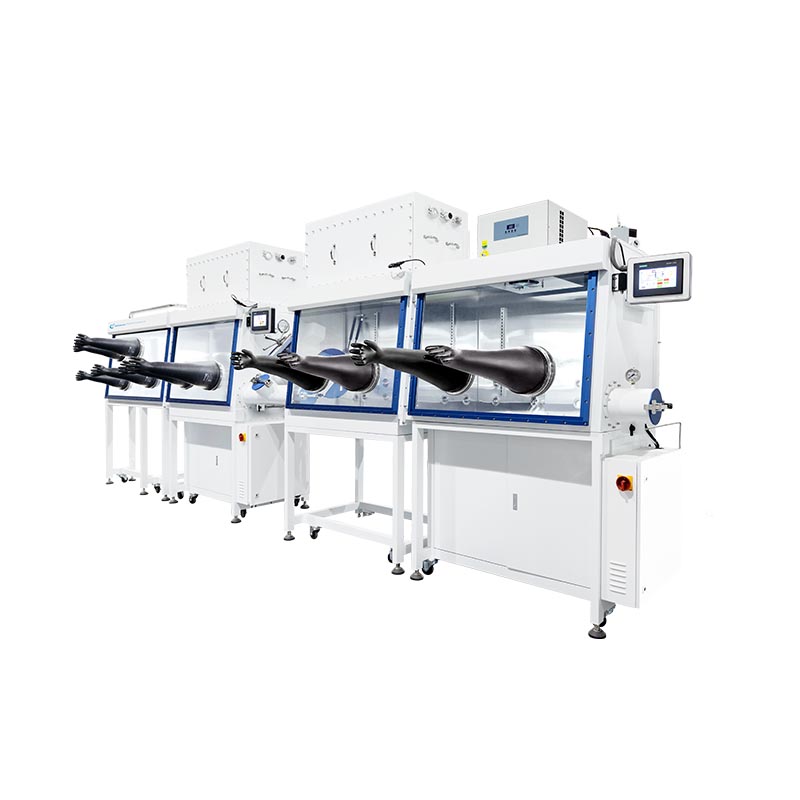
When handling samples inside avacuum glovebox, it is essential to maintain an ultra-low moisture and oxygen environment while ensuring the safety of both the operator and the equipment. Even minor oversights can result in experimental failure, equipment damage, or personal injury. MIKAIRONA introduces the key precautions to keep in mind when handling samples inside a vacuum glovebox:
1. Personal Protection and Preparation Before the Experiment
Safety measures should be put in place before formal operation begins, as they are the first line of defense for safe operation. Personnel should wear a long-sleeved laboratory coat and protective gloves. Remove rings, watches, and other sharp accessories, and keep fingernails trimmed to avoid scratching or puncturing the rubber gloves.
All samples and instruments to be transferred into the glovebox must be thoroughly dried. Highly hygroscopic materials such as tissues and cotton swabs should be dried in a vacuum oven to prevent moisture from being introduced and disrupting the glovebox's moisture and oxygen balance. Glassware should also be oven-dried in advance.
After startup, confirm the equipment status and check the moisture and oxygen levels, glove integrity, transfer chamber sealing ring, and gas cylinder pressure. Experiments should only begin after all parameters have reached the required specifications.
2. Sample Transfer Through the Transfer Chamber
The transfer chamber is the passage for materials entering and leaving the glovebox. Inadequate purging can directly introduce air into the glovebox. For small samples and tools, the smaller transfer chamber should be used whenever possible to reduce inert gas consumption and minimize disturbances to the pressure inside the glovebox.
After placing items in the transfer chamber, complete the full gas-circulation purging process. For sealed reagent bottles and test tubes with internal cavities, loosen the caps before transfer to prevent trapped air from being released into the glovebox when the containers are opened.
During evacuation, use the valve to control the pumping rate and prevent powders from being drawn out or fragile containers from breaking. For samples that cannot withstand negative pressure, pay close attention to the pressure during gas replacement and avoid applying excessive vacuum.
3. Key Points for Operations Inside the Glovebox
All movements inside the glovebox should be gentle and controlled. Slow down when inserting your hands into the gloves to prevent the box pressure from temporarily exceeding 12 mbar and triggering protective shutdown of the circulation system. The glovebox should be maintained at a slight positive pressure to prevent outside air from entering.
Sharp objects such as tweezers and needles should be stored properly to prevent them from puncturing the gloves. Volatile organic solvents should not be left open for extended periods. Solvent vapors can damage the molecular sieves and catalysts in the purification columns, so reagent bottles should be tightly capped immediately after use.
Aluminum foil can be placed in the work area to collect spilled reagents and debris. At the end of the experiment, wrap the waste and remove it through the transfer chamber. Keep reagents and reaction systems open for as short a time as possible to reduce solvent evaporation and contamination of the glovebox.
4. Equipment Monitoring, Maintenance, and Emergency Response
Continuously monitor the moisture and oxygen readings during experiments. If the values rise abnormally, stop the experiment immediately and investigate the problem.
The activated-carbon adsorber used for organic solvents should be replaced regularly.
In an emergency: if a glove is damaged, stop operation immediately, temporarily seal the damaged area with tape, and contact the equipment manager for replacement. Do not attempt to repair the glove yourself. If a reagent is spilled, first stop the circulation system, clean up the contamination, and remove the waste from the glovebox. Clean the glovebox before restarting the circulation system.
In summary, vacuum glovebox operation follows three core principles: all items entering the glovebox must be thoroughly dried; materials must undergo strict gas purging during transfer; and all operations should be performed gently and carefully. MIKAIRONA reminds users that only by strictly following operating procedures can reliable experimental data be obtained and the service life of the equipment extended.