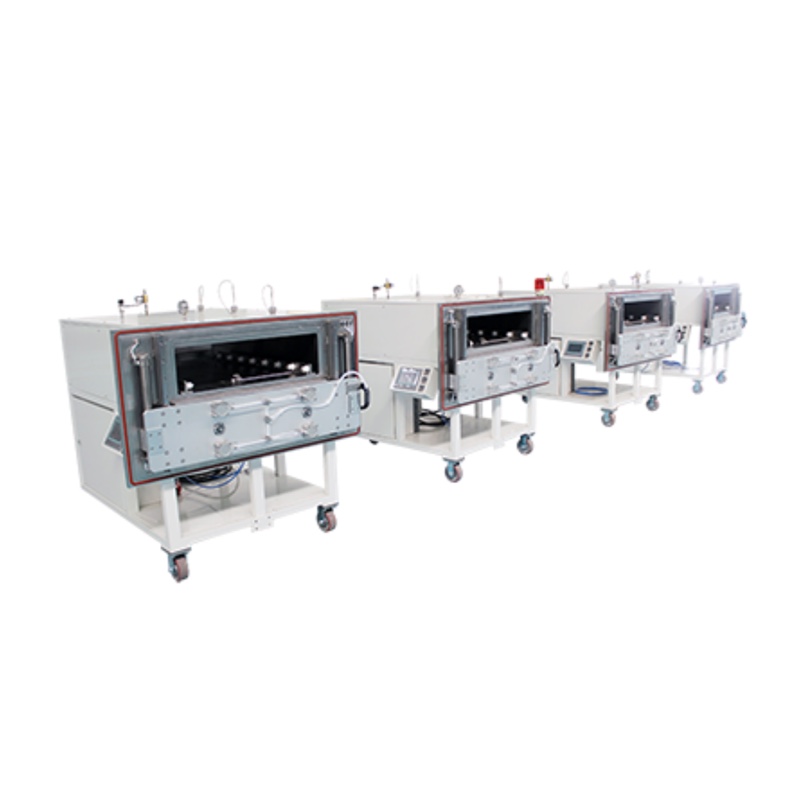
Super capacitor and lithium battery materials show a critical, unforgiving sensitivity to moisture and oxygen. Even momentary atmospheric exposure severely degrades cycle life, diminishes energy density, and compromises intrinsic cell safety. Scaling production from lab-based R&D to high-throughput commercial volumes often creates severe operational bottlenecks. You simply cannot risk compromising the inert environment during this scale-up phase. Unfortunately, relying on traditional disjointed equipment inevitably leads to transfer contamination and unacceptably high defect rates.
To solve this, manufacturers now utilize the fully automated assembly line as the standard for verifiable, high-yield production. Transitioning to this integrated equipment removes human error and seals the entire workflow. This article serves as a comprehensive technical evaluation guide. Engineering and procurement teams can use it to effectively shortlist top-tier system integrators and build a world-class production facility.
Key Takeaways
Strict Environmental Baselines: High-performance systems must sustain H2O and O2 levels below 1 ppm with leakage rates strictly controlled under 0.001% vol/h.
Eliminating Transfer Risks: Integrated "oven glove box systems" utilize proprietary docking and transition chambers to prevent air exposure during material transfer.
End-to-End Automation: Modern configurations automate the entire sequence—from scanning, electrolyte injection, and resting to sealing and automated defect sorting—hitting stable production cadences (e.g., 200 pcs/min for standard cells).
Capex Optimization: Advanced setups employ modular designs, such as linking multiple movable ovens to a single centralized automated glove box, maximizing throughput while controlling capital expenditure.
The Business Case for Integrated Automated Glove Box Systems
Yield directly correlates with strict environmental control in modern battery production. Trace moisture and oxygen contamination drastically spike the internal resistance, or Equivalent Series Resistance (ESR), of super capacitors. High ESR reduces cycle life and lowers power density. If you expose delicate electrode materials to ambient air, they degrade almost instantly. A high-performance super capacitor glove box eliminates these fatal exposure events entirely. It provides a constant, ultra-pure argon or nitrogen atmosphere.
Disconnected production lines inherently flaw the manufacturing process. Many legacy facilities still rely on manual transfers. Operators move materials between separate drying ovens, manual injection stations, and standalone sealing units. Every time they open an oven door or transport a tray across the room, they introduce massive contamination vectors. These brief exposure windows trap microscopic moisture inside the cell packaging. Over time, this leads to gas generation, cell swelling, and premature failure in the field.
The "All-In-One" architecture solves this fundamental issue. This design philosophy integrates the entire workflow into a single continuous loop. Baking, transition, and advanced battery assembly happen inside an uncompromised inert gas environment. You load raw materials at one end. The system then automatically handles them through every critical phase. Finally, it ejects fully sealed, quality-checked cells at the other end. This unbroken chain guarantees maximum yield and reliable electrochemical performance.
Baseline Engineering Specs for a Battery Production Glove Box
You must evaluate vendors based on verifiable, hard data rather than theoretical marketing claims. Setting an uncompromising industry standard for a battery production glove box starts with atmosphere purity and leakage rates. High-grade systems consistently maintain H2O and O2 levels below 1 ppm. More importantly, they demonstrate leakage rates strictly below 0.001% vol/h (or under 0.0006vol%/H). If a vendor cannot provide independent verification of these leakage thresholds, their system will overwork the purification unit and eventually fail.
Sensor Reliability and Maintenance Strategies
Sensors act as the critical nervous system of your inert environment. However, battery electrolytes often produce highly corrosive hydrofluoric (HF) acid vapors. Standard sensors degrade quickly in these harsh conditions. You should look specifically for anti-corrosive P2O5 moisture sensors. Engineers can easily regenerate these specialized sensors using a simple acid wash process. This extends their lifespan significantly. For oxygen detection, prioritize solid-state ZrO2 oxygen sensors. They do not rely on depleting chemical cells, which drastically minimizes ongoing consumable costs.
Manifold and Valve Design Standards
Micro-leaks often originate at poorly designed connection points. Legacy systems use complex, disjointed piping networks. They feature hundreds of vulnerable threaded connections. Modern integrated systems solve this by utilizing stainless steel manifold solenoid valve seats. By machining multiple valve pathways into a single solid stainless steel block, engineers drastically reduce the number of external seals.
Consider the core advantages of integrated manifold designs:
They eliminate up to 70% of traditional pipe joints.
They centralize pneumatic control for easier maintenance access.
They provide a smaller overall footprint within the equipment chassis.
They significantly lower the statistical probability of vacuum decay over time.
Mapping the Automated Battery Assembly Process
Transitioning materials from mixing and slitting into the inert environment requires precise handling. Systems must safely move electrodes and separators without introducing ambient air. Automated airlocks and vacuum transition chambers manage this delicate handoff. Once inside the automated glove box, precision mechanisms take full control of the workflow.
High-speed assembly demands extreme mechanical stability. Precision tooling and strict coaxiality dictate the quality of your final seal. We highly recommend inspecting the mechanical drive systems. They should feature heavy-duty linear guides to ensure smooth, vibration-free movement. Additionally, jacket-style clamping mechanisms must hold the cells perfectly rigid. This strict coaxial alignment guarantees that grooving and sealing tools contact the casing evenly. Without it, you will see high rates of micro-cracking and electrolyte leakage.
Core Inert Workstations Explained
Inside a standard capacitor glove box, several distinct automated stations execute the actual production steps. We have mapped out the three most critical workstations below.
Workstation Module
Primary Function
Critical Quality Focus
High-Precision Vacuum Injection
Injects exact volumes of electrolyte into the cell under deep vacuum conditions.
Ensures complete electrode wetting and prevents trapped gas bubbles inside the jelly roll.
Grooving & Pre-Sealing
Forms the mechanical groove on the metal casing and performs an initial crimp.
Maintains strict dimensional tolerances so the rubber bung seats perfectly against the casing.
Secondary Shaping & Final Sealing
Applies final pressure to fold the casing edge securely over the sealing gasket.
Creates a hermetic, long-term barrier against moisture ingress and internal pressure leaks.
Automated Quality Control Integration
You cannot rely on manual quality checks during high-speed production. In-line testing must occur immediately after sealing. Modern lines integrate internal resistance (IR) and open-circuit voltage (OCV) testing directly into the conveyor system. If a cell fails these electrical checks, the system flags it. Robotic sorting arms then automatically divert the defective units into a localized reject bin. This automated triage happens without breaking the atmospheric seal, keeping the main line running at optimal speed.
Evaluating an Oven Glove Box System for Scale and Capex
Scaling up production often strains capital expenditure budgets. You do not need to duplicate expensive gas purification systems for every new production line. Instead, manufacturers utilize flexible layouts to maximize throughput. The most efficient strategy pairs one centralized assembly box with multiple movable vacuum ovens.
An integrated oven glove box system allows you to scale baking capacity independently. You can configure movable ovens in parallel or serial combinations. Once an oven finishes its drying cycle, operators roll it directly to the centralized transition chamber. A proprietary docking mechanism seals the connection. The oven door opens directly into the inert environment. This completely eliminates drying bottlenecks and shields materials from ambient air.
We must also address energy and thermal management. Hot materials entering a sealed environment cause severe pressure spikes. To mitigate this, engineers integrate active cooling transition chambers. These specialized airlocks feature integrated water-chilled jackets. They quickly lower the thermal load of the baked cells before they enter the main working area. This simple addition reduces utility consumption, stabilizes internal pressure, and drastically shortens cycle times.
Finally, solvent recovery integration plays a massive role in operational efficiency. Electrolytes evaporate during the injection and resting phases. A high-capacity inert gas purification system must include an efficient solvent trap. Advanced systems offer 45-60L O2 absorption capacities alongside robust solvent recovery chillers. Capturing these volatile organics protects your purification media, ensures environmental compliance, and reduces long-term maintenance costs.
Implementation Realities, Utilities, and Risk Mitigation
Installing complex machinery requires extensive facility preparation. You cannot simply plug these systems into a standard wall outlet. Engineering teams must conduct a thorough facility audit before the equipment ever ships.
Facility Readiness Checklist
Successful capacitor manufacturing relies on stable, industrial-grade utilities. Use the following baseline parameters to prepare your facility:
Regulated Inert Gas Supply: Your nitrogen or argon supply must maintain a stable pressure between 0.4 and 0.7 MPa. Pressure drops will trigger system alarms and halt production.
Cooling Water Loops: Transition cooling chambers and sealing equipment require dedicated chilled water. Ensure a flow rate of 4 to 6 L/min at a consistent 0.2 MPa pressure.
Electrical Power Loads: Base systems typically require 6KW to 7KW of stable power. Longer, fully automated lines may push well past 10KW. Ensure your factory grid can handle these continuous loads without voltage sagging.
Lead Times and Delivery Standards
Bespoke automated lines require significant engineering time. You should set realistic expectations for a standard 90-day customization and build cycle. International shipping presents another major risk factor. Sea freight exposes delicate machinery to extreme humidity and salt air. You must insist on strict vacuum, moisture-proof packaging. Additionally, require fumigation-free crating to avoid customs delays at the destination port. A compromised shipment can delay your production launch by months.
IoT Integration and Long-Term Reliability
Modern production facilities demand data transparency. You should actively assess systems that offer comprehensive Industrial Internet of Things (IoT) capabilities. Remote Programmable Logic Controller (PLC) monitoring allows your engineers to track performance from anywhere. Real-time fault alarming pushes notifications directly to smartphones or control room dashboards. Ensure the vendor utilizes strong data encryption to protect your proprietary production metrics.
Do not finalize a contract without clarifying standard Service Level Agreement (SLA) expectations. Demand a comprehensive 12-month zero-fault warranty. This warranty should explicitly include combined remote diagnostics and on-site commissioning support. If a major mechanical failure occurs, the integrator must commit to rapid response times to minimize your operational downtime.
Conclusion
Transitioning to an automated assembly environment represents a massive leap forward. It is not just a simple equipment upgrade. It requires a complete shift to a verifiable, zero-contamination production philosophy. By eliminating manual transfers and integrating advanced sensors, you protect your materials at every vulnerable stage. This meticulous control guarantees higher yields, lower ESR, and safer end products.
Your engineering teams should begin by auditing current operational bottlenecks. Compare your existing drying times directly against your assembly speeds. Identify where manual handling slows you down. Once you map these gaps, request detailed Bills of Materials (BOM) and customized footprint layouts from shortlisted turnkey integrators. A well-planned, fully automated system will ultimately define your competitive edge in the global battery market.
FAQ
Q: What is the standard leakage rate for a commercial battery production glove box?
A: Industrial benchmarks require a leakage rate of strictly less than 0.001% vol/h. Maintaining this exact threshold ensures H2O and O2 levels stay below 1 ppm without overworking the automated gas purification system. High leakage rates will cause rapid sensor degradation and premature filter failure.
Q: Can an automated assembly line accommodate different capacitor sizes?
A: Yes, premium automated systems offer flexible, modular tooling. Typical handling ranges cover diameters from φ6.8 to 24.5mm. Custom formats can even reach up to 60mm. Operators manage varying cell heights through programmable PLC stations and adjustable mechanical clamps.
Q: How does a movable oven glove box system reduce overall costs?
A: By utilizing a specialized docking mechanism, multiple movable ovens can interface directly with a single glove box transition chamber. This prevents ambient air exposure completely. It allows manufacturers to scale baking capacity independently from the expensive gas purification and main assembly infrastructure, lowering overall Capex.
Q: What utilities are required to run an automated capacitor manufacturing line?
A: Facilities generally need stable industrial electrical power, typically ranging from 6-10KW depending on the line length. They also require a regulated inert gas supply between 0.4–0.7 MPa. Furthermore, a dedicated cooling water loop providing 0.2 MPa at 4~6L/min is necessary to support the transition chambers.