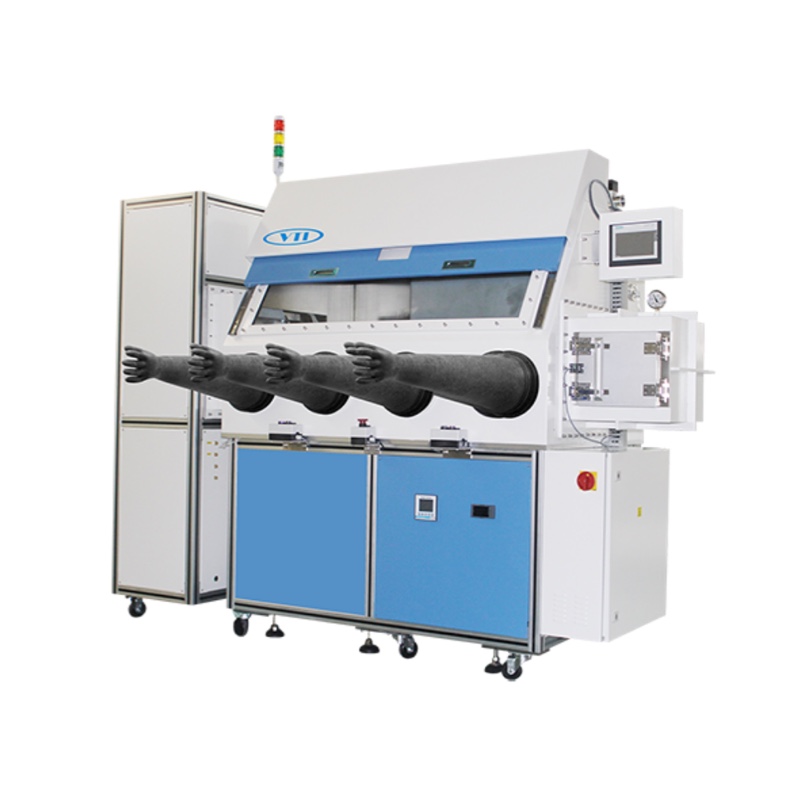
Weld failures in reactive metals carry a staggering price tag for modern manufacturers. When processing titanium, zirconium, or advanced aerospace alloys, even minute atmospheric exposure causes immediate embrittlement and destructive porosity. Standard localized shielding gas simply falls short. You cannot rely on open-air argon flows for critical hermetic sealing applications where component failure risks human life. You absolutely need a strictly controlled, high-purity environment.
This sealed approach protects the raw material from rapid oxidation during the liquid phase. It also aggressively shields your operators from hazardous, sub-micron welding byproducts. This guide provides manufacturing engineers and procurement teams with a clear, highly technical framework. We will explore how to evaluate and properly specify the right atmospheric enclosure system. You will learn the exact criteria needed to succeed, whether you are building a manual R&D setup or configuring fully automated, high-throughput production lines.
Key Takeaways
Atmospheric Control: Achieving and maintaining ≤ 1 ppm of oxygen and moisture is the baseline for defect-free welds in reactive alloys.
Process Matching: Equipment configurations must align with the welding method; TIG welding glove boxes prioritize ergonomics, while laser welding glove boxes require integrated motion control, wobble heads, and vision systems.
Throughput Realities: Cycle times are heavily dictated by antechamber design—specifically, the inclusion of high-temperature bake-out ovens paired with active water cooling.
Compliance & Safety: Modern systems must feature robust soot filtration (HEPA) and support FDA-compliant data logging and barcode-driven automation for medical and aerospace applications.
The Business Case for a Dedicated Inert Welding Chamber
Atmospheric exposure during the critical cooling phase easily destroys high-value components. If you weld reactive metals in an open environment, they absorb oxygen and nitrogen rapidly. This chemical reaction creates severe discoloration, often manifesting as dark blue or blackening along the seam. Beyond the aesthetic ruin, the metal becomes highly brittle and prone to catastrophic mechanical failure. Using a dedicated inert welding chamber prevents this structural degradation completely. It bathes the heated part in ultra-pure argon or helium gas, shielding it entirely until it cools to safe handling temperatures.
Many bottom-of-the-funnel manufacturing applications strictly demand this controlled setup to pass quality assurance. You cannot manufacture these sensitive components reliably without hermetic isolation. Major target applications demanding this setup include:
Implantable medical devices requiring perfect bodily fluid isolation (pacemakers, neurostimulators).
Lithium-ion battery packaging ranging from tiny AAA formats up to robust Sub C cells.
Microwave enclosures and delicate aerospace electronic housings.
Advanced aerospace sensors exposed to extreme pressure differentials.
Beyond material integrity, operators face severe health risks from inhaling hazardous fumes. Processing titanium and similar alloys releases dangerous sub-micron particulates into the breathing zone. Containing these toxic byproducts protects your workforce effectively. Companies frequently overlook operator safety in purely ROI-focused equipment evaluations. By thoroughly containing the fumes, you meet stringent corporate social responsibility standards. You also eliminate the daily friction of operators wearing cumbersome personal respirators.
TIG vs. Laser Welding Glove Box Configurations
Matching the physical equipment layout to your specific joining method is crucial for long-term success. A specialized TIG welding glove box serves high-mix, low-volume production schedules perfectly. It excels in intricate repair work and rigorous metallurgical R&D applications. When evaluating these manual systems, you must prioritize ergonomic glove port placement. Operators need exceptionally comfortable access to maneuver torches and filler rods during complex tasks. You must also decide between space-saving benchtop footprints and robust standalone frames. A critical performance metric here is rapid purge capability. Top-tier R&D units can reach 10 ppm working conditions from ambient air in under 10 minutes, saving countless hours of prep time.
Alternatively, a laser welding glove box targets high-precision, heavily automated manufacturing. These sophisticated setups deliver incredibly low heat-affected zone (HAZ) hermetic sealing. They seamlessly combine high-power Quasi-CW fiber lasers with complex internal motion control. You will often see elaborate up to 5-axis CNC staging systems operating directly inside the purified enclosure.
System Focus
TIG Configuration Characteristics
Laser Configuration Characteristics
Primary Use Case
Prototyping, repair operations, and low-volume batching.
High-precision sealing, rapid throughput, and low HAZ.
Internal Mechanics
Ergonomic port access, manual part manipulation fixtures.
Integrated 3-axis to 5-axis CNC motion control stages.
Optical & Visual Needs
Standard UV-filtered viewing windows to prevent eye strain.
Galvo beam delivery systems and integrated wobble heads.
Advanced optical integration defines a successful laser implementation. Integrated wobble welding heads bridge varying part tolerances by spiraling the beam across the gap. They effectively eliminate micro-cracking during rapid solidification cycles. Pairing this wobble technology with precise galvo beam delivery guarantees maximum production speed and flawless cosmetic finishes.
Critical Specifications for Evaluating a Purifier System
Establishing highly quantifiable purity metrics prevents costly, unseen production errors. You should demand strict atmospheric control, targeting ≤ 1 ppm oxygen and moisture under unladen conditions. Relying on an advanced, closed-loop dual-column purifier system ensures continuous operational stability. This design allows the equipment to regenerate one chemical column while the other actively scrubs the chamber atmosphere, enabling true 24/7 manufacturing operations.
Soot and fume management remains a critical failure point for novice buyers. Poorly specified filtration systems quickly choke on reactive material byproducts, bringing production to a complete halt. You must look for automatic dual-valve dust and soot removal mechanisms. Furthermore, you must specify HEPA filtration designed explicitly to capture microscopic titanium and aluminum debris. Proper filtration prevents costly optics contamination and extends the lifespan of your protective cover slides. It also maintains strict ISO 2 or ISO 3 (Class 10/100) cleanliness levels internally, protecting any sensitive internal electronics.
Real-time environmental monitoring replaces outdated guesswork. Never rely on assumed purge timeframes to guarantee your part safety. Built-in, verifiable moisture and oxygen analyzers provide absolute processing certainty. They must include programmable, hard-stop threshold alarms. If oxygen spikes unexpectedly mid-cycle, the system logic halts the laser immediately, saving the batch from irreversible oxidation.
Optimizing Cycle Times: Antechambers and Material Handling
Batch loading through poorly designed transition locks often creates severe production bottlenecks. Implementing smart material handling strategies resolves this delay and maximizes machine utilization. A well-engineered welding glove box should feature sophisticated dual-chamber processing pathways to keep production moving smoothly.
Consider these three essential optimization strategies when reviewing quotes:
Dual-Chamber Strategies: Specify systems utilizing two distinct rectangular antechambers. This dedicated layout separates raw, contaminated material staging from active, purified processing zones, smoothing out the entire workflow.
Bake-Out Ovens and Active Cooling: Heating components under a deep vacuum aggressively outgasses trapped moisture and surface contaminants. You will typically bake parts between 200°C and 400°C. However, these bake-out ovens must include an active water-cooling unit. Without rapid chilling, your production rhythm stalls completely. You simply cannot handle hot parts or introduce them safely into the stable main enclosure without causing dramatic temperature fluctuations.
Poka-Yoke Door Design: Operator fatigue inevitably causes unwanted atmospheric exposure. Poka-yoke door designs prevent accidental breaches entirely through mechanical logic. You should use manually operated outer doors paired perfectly with system-interlocked automatic inner doors. The inner door remains electronically locked until the antechamber strictly matches the internal purity levels.
Automation, Traceability, and Regulatory Compliance
Automated processing setups dramatically reduce costly scrap rates on expensive materials. Integrated vision systems drive high-precision glove box welding success by removing human alignment errors. Cutting-edge features like auto-focus and contour seam-tracking adapt seamlessly to minor part deviations. They guide the laser path flawlessly along complex, three-dimensional geometries, ensuring a perfect hermetic seal every single time.
Advanced software and data logging provide mandatory legal protection for your business. For medical and aerospace component buyers, strict traceability is non-negotiable. The proprietary system software must support tightly controlled, hierarchical user access. Comprehensive data tracking ensures you survive intense FDA inspections or stringent ISO 13485 audits. Every single weld pulse, gas level reading, and error code gets recorded and archived securely to a central server.
Intelligent job control features eliminate operator input errors entirely. You should evaluate machines offering integrated barcode or 2D matrix code scanners. When the operator scans a raw material tray, the welding chamber automatically loads the correct laser recipe and motion path. This lock-step automation ensures highly repeatable quality across shifting shifts, varying skill levels, and different production facilities.
Conclusion
A modern atmospheric enclosure represents a fully integrated, high-yield manufacturing cell. It is no longer just a simple sealed box housing a pair of gloves. Environmental control, powerful beam delivery, and micro-precision motion mechanics operate under one unified software interface. This intelligent synergy guarantees zero-defect yields when joining highly reactive, expensive alloys.
We strongly recommend requesting detailed cycle-time simulations before committing to any capital expenditure. Ask equipment manufacturers to perform sample test-welds on your specific materials to verify HAZ limits and penetration depth. You might also explore contract manufacturing or try-before-you-buy services to validate your specific geometries. Validating the entire process upfront completely secures your investment. It streamlines your ultimate production deployment and ensures your team hits their throughput targets from day one.
FAQ
Q: How long does it take to purge a welding glove box?
A: Standard purge cycles can take several hours depending on the internal volume and flow rate. However, advanced R&D systems use optimized displacement techniques. They can achieve working conditions of less than 10 ppm oxygen and moisture in roughly 10 minutes. This rapid turnover is ideal for high-mix batch processing.
Q: Why is active cooling necessary in an antechamber?
A: High heat effectively removes trapped moisture from porous components. However, placing hot parts directly into the main workspace disrupts the internal temperature and damages sensitive electronics. Active cooling rapidly chills the components. This shrinks the overall cycle time and allows immediate, safe handling for the operator.
Q: Can the purifier system handle continuous titanium laser welding?
A: Yes, it can easily handle high-volume titanium processing. The system must be specified with dedicated, closed-loop soot and dust removal filters. Integrating robust HEPA filtration prevents dense particulate buildup. This stops hazardous byproducts from overwhelming and degrading the main gas purification columns during long shifts.
Q: Can a laser welding glove box be upgraded or retrofitted later?
A: Modular designs allow for future expansion, but they require upfront architectural planning. Adding extra glove ports or upgrading from 3-axis to 5-axis motion is possible. However, enlarging antechambers or integrating complex vision systems later proves difficult. Always specify a highly scalable frame during your initial purchase.